In 2000, while researching Agwan Dorjieff and Peter Badmaev, I obtained a Russian language book.
Grekova, T.I. Tibetskaia Meditsina v Rossii: Istoriia v Sud’bakh i Litsakh. [Tibetan medicine in Russia: The History in Fates and Faces]. Aton, St. Petersburg, 1998.
Nicolas Tereshchenko (1920-2001),
https://gurdjieffclub.com/en/nikolai-tereshchenko
very generously read the book and sent me English translations of passages from transcripts of secret police interrogations of Gleb Bokii (the case of the United Labor Brotherhood Masonic Lodge,) during the Great Purge of 1936 -1938.
At his interrogation the accused (that is Gleb Ivanovich Bokii) confessed that he became a mason in 1909. The lodge he joined was created by the well-known mystic Gurdjieff, who after the revolution emigrated to the West. (pages 290-1):
As well as G.I. Bokii, the other members of the Lodge “Unique Working Brotherhood” mentioned in Grekova’s book were: N.K. Roerich and wife, psychiatrist Dr. K.N. Riabinin, a commissar B. Stomoniakov, the sculptor S.D. Mercurov and a party member I.M. Moskvin.
On 12 October 2007 I sent Paul Beekman Taylor copies of Tereshchenko’s translations suggesting that Gurdjieff may have established a Masonic Lodge in Moscow as early as 1909. This information was included in his book Gurdjieff’s Invention of America, Eureka Editions, Utrecht, 2007. (page 232) and he explored it further, with quotes from Bokii’s confession, in his G.I. Gurdjieff A NEW LIFE, Eureka Editions, Utrecht, 2008. (pages 38, 40, 189)
Following the publication of;
Andrei Znamenski, RED SHAMBHALA, Magic, Prophecy, and Geopolitics in the Heart of Asia, Theosophical Publishing House, Wheaton, 2011, and
Oleg Shishkin “The Occultist Aleksadr Barchenko and the Soviet Secret Police (1923-1938)” in “The New Age of Russia Occult and Esoteric Dimensions”, Edited by Birgit Menzel Michael Hagemeister Bernice Glatzer Rosenthal, translated by Josephine von Zitzewitz, Verlag Otto Sanger Munchen-Berlin 2012
I emailed Taylor on 23 October 2012
Mea Culpa: No Gurdjieff 1909 Moscow “Masonic Lodge”
New Russian material shows that the idea of a Masonic Lodge in Moscow in 1909 headed by Gurdjieff is incorrect. The complete transcripts of Bokii’s interrogations show that Bokii’s “confession” was heavily edited by his interrogators to fit the official party line of a Masonic conspiracy (something I suspected at the time) and some of the supposed members such as Gurdjieff and Roerich had nothing to do with it.
The United Labor Brotherhood (ULB) was a Buddhist/Communist Commune established in Moscow in 1923 by Alexander Barchenko with no connection to Masonry. Barchenko’s written instructions to the members (Shishkin p84) have survived through his descendants. They are derived from Blavatsky and Saint-Yves d’Alveydre and show no trace of any of Gurdjieff’s ideas.
(Znamensk, p60) says “The blueprint for ULB was G. I. Gurdjieff’s United Labor Commonwealth which Barchenko learned of from his close friend Peter Shandarovsky, a former member of Gurdjieff’s circle who chose to remain in Russia”.
Prior to 1923 Barchenko was living in St Petersburg and wrote two novels Doctor Black (Doktor Chernyi) 1913 and From the Darkness (Iz Mrak) 1914.
Leonid Heller (Menzel page 203) says “his multi-volume novel Doctor Black (Doctor Cheryne) was published only in 1991, and is still awaiting its researcher. The prototype for the novel was Barchenko’s guide to the esoteric sciences, Petr D. Uspensky”.
In this email I incorrectly stated that Barchenko’s had established his “United Labor Brotherhood” in 1923 in Moscow. He was in fact living in Petrograd at the time.
That Shandarovsky was a member of Gurdjieff’s ‘International Fellowship for Realization through Work’ in Essentuki in 1918, is confirmed in Thomas and Olga de De Hartmann’s Our Life with Mr. Gurdjieff, Definitive Edition, ARKANA, Penguin Books, London, 1992, where they say
Among those who had recently arrived was P.V. Shandarovsky, a man who had come from the ‘outside’ on his own initiative and who later played an important part in our life. He behaved very well, was very modest and did not ask to be received in the Institute. He said he had come hoping to find in Mr Gurdjieff his teacher. He was a well-educated man, still young, and played the violin quite well. He read me his translation of Heredia. He had been interested in occultism and magic for a long time and told me about an experiment with the Lord’s Prayer that he had once practiced.
My Gurdjieff allowed him to come in the evenings for the Gymnastics and, later, for lectures. He was very punctual, continued to be modest and at last Mr Gurdjieff accepted him in the Institute. This man, Shandarovsky, now had to play his violin, a real Guarneri, for the Gymnastics. (page 53)
Mr Gurdjieff had given us the task to think of a suitable name for our society, considering the fast-changing political situation. Ouspensky suggested ‘The Society for Struggle against Sleep’. Mr Gurdjieff laughed, but said it was too obvious. After long discussion, the title finally selected was Essentuksy Obshchezhitiye Mmezhdunarodnavo Ideino-Trudovovo Sodruzhestva, which means roughly “The Essentuki Home of the International Fellowship for Realization through Work’. (page 58)
About six weeks before we were to leave Essentuki Mr Gurdjieff had astonished and even shocked us all, as I have mentioned, by telling Shandarovsky to go to the Soviet authorities and apply for a government position that required legal training. Since Shandarovsky was a good lawyer, he was not only appointed to the position, but was soon promoted and before long found himself in charge of the office that issued passports and other such documents. Of course, Mr Gurdjieff at once told him to issue Soviet passports to all of us, describing us as citizens of Essentuki: one was a teacher, another a gardener, one retired, one a simple worker and so on. (page 79)
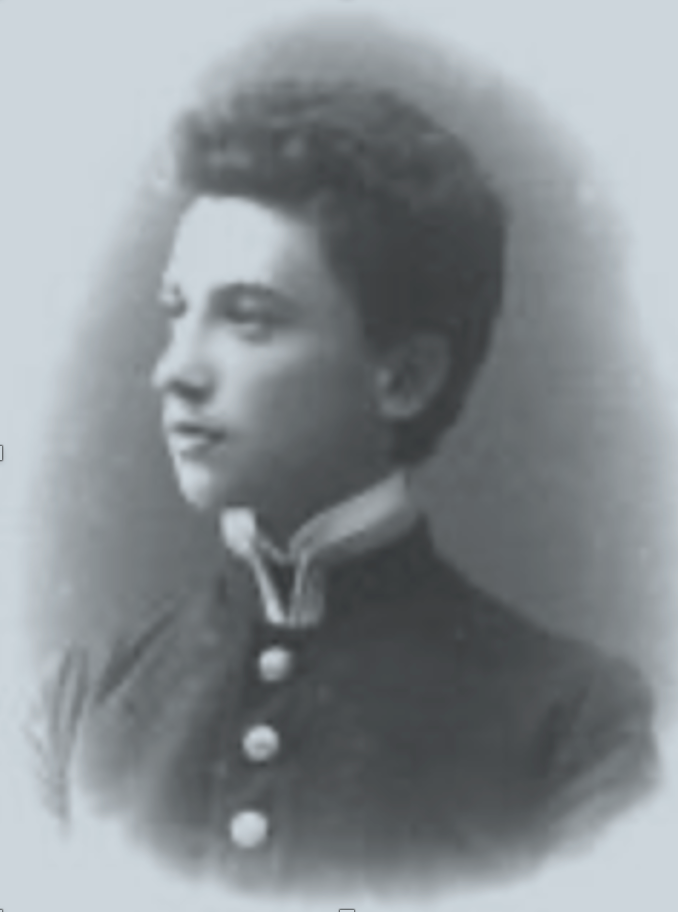
Pyotr Sergeyevich Shandarovsky (1887-1947)
The lawyer, Shandarovsky was well known before the revolution in the occultist circles of St. Petersburg. The son of a military dignitary – his father S. P. Shandarovsky held the post of district military commander in the Mogilev province in the early 1900s – he graduated from the law faculty of St. Petersburg University. In the pre-revolutionary years, he served in the Military Department (he was a coder in the coding department), but he saw his true calling in science and art.
After Gurdjieff and his group left Essentuki for Tiflis, Shandarovsky had returned to Petrograd. This explains how Gurdjieff’s talks from Essentuki were circulating in secret in Moscow long after he had left Russia.
After the revolution, Shandarovsky gave lectures and worked as an artist-designer. (During his arrest in 1927, when the investigator asked him about his profession, he answered: “an artist – a researcher.”) The subject of Shandarovsky’s scientific interests was ideography, or more precisely, international ideographic writing. He, by his own admission, introduced his research in this area to A. V. Lunacharsky, who then sent him to the Museum Department of the People’s Commissariat of Education. There, Shandarovsky was advised to contact one of the Hermitage specialists, which he did.
https://rgfond.ru/person/90250?ysclid=mddkiqyk53641933731
Barchenko met Shandarovsky completely by chance in Petrograd in the winter of 1922-1923. Eleonova Maksimilianovna Kondiain (1899-1986) wife of astrophysicist A.A. Kondiain tells about it :
“One winter, A.V was standing in front of a shop window and examining a pattern on an oriental carpet on display, which had elements of the Universal Scheme. A citizen, no longer young, thin, was standing nearby and was also examining the carpet. A. V. turned to him: “Does this mean anything to you?” And he drew some geometric figure in the snow with his foot and asked: “Does this mean anything to you?” A. V. also drew some figure in the snow with his boot… So, having exchanged drawings, they went together.
Shandarovsky sat with Al. Vas. in the room all night. Natasha (Barchenko’s wife) only occasionally brought them tea. They sat almost silently, but during the night they covered a whole pile of paper with numbers. Sometimes Al. Vas. would jump out of the room, excited, ecstatic. He would take off his pince-nez, ruffle his hair, rub his reddened eyes and let out ecstatic exclamations.
The importance of this meeting, according to E. M. Kondiain, was that P. S. Shandarovsky introduced A. V. Barchenko to the “numerical mechanism” of Ancient Science. (Probably Gurdjieff’s Enneagram – my insert) Later, close relations were established between them. P. S. Shandarovsky often visited A. V. Barchenko, and after the latter settled in the lama hostel at the Buddhist Temple, he began to visit him there regularly. (Pyotr Sergeyevich himself also had many acquaintances among the lamas.)
During one of his meetings with A. V. Barchenko, P. S. Shandarovsky told him that his teacher G. I. Gurdjieff, who by that time had already left Russia with a group of students, possessed “some knowledge of ancient science” obtained in Kafiristan. He also told him about the creation by G. I. Gurdjieff just before the revolution, of the “United Labor Commonwealth” which united his followers in Moscow and Petrograd. From P. S. Shandarovsky, A. V. Barchenko learned about other students of G. I. Gurdjieff who remained in Russia – S. D. Merkurov (his cousin, a famous sculptor), Shishkov and Zhukov. They all lived in Moscow, and later A. V. Barchenko would try to establish contact with them.
Alexander Andreev, Time of Shambhala, Neva, St Petersburg, 2002 (page 26)
https://profilib.org/chtenie/92659/aleksandr-andreev-vremya-shambaly-26.php
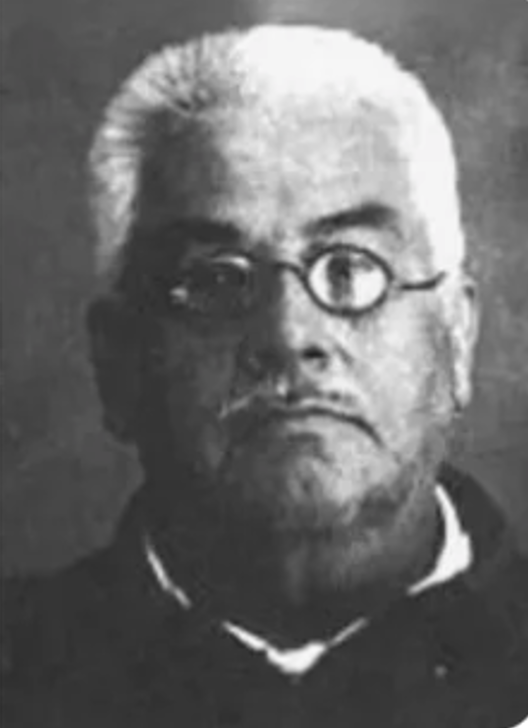
Alexander Vasilyevich Barchenko (1881-1938)
BBarchenko was born in the ancient city of Yelets in the Oryol province…. His mother came from a “spiritual family.” Thanks to her influence, he was raised in a religious spirit. He said, even in his youth he was distinguished by “an inclination towards mysticism and everything mysterious….. His primary education was in his hometown…. He then went to the St. Petersburg 2nd Gymnasium school for another three years, graduating in 1901. The rigorous discipline and structure of this school he would take into adult life and successfully use later in creating his “labour brotherhood”. The same year he entered the Military Medical Academy but only studied for one year. He then transferred to the medical faculty of Kazan University, where he attended lectures for two years and from there to Yuryev (formerly Dorpat, now Tartu) University. Here, his classes lasted only one semester. By this time, Barchenko had already started a family and in 1904 his wife gave birth to a son, Vasily. This marriage soon fell apart and his wife and son left for Moscow…… Barchenko explained his departure from Yuryev University as “lack of funds”…..
At Yuryev he encountered his first mentor professor of Roman law A.S. Kristov who while in Paris had met with the famous mystic-occultist Saint-Yves d’Alveydre. Kristov infected him with d’Alveydre’s ideas about “prehistoric culture” and “ancient science” which became his obsessions for the rest of his life.
Having ceased his medical studies, he returned to St. Petersburg and entered the civil service. This didn’t appeal to him so he spent the next three years searching for his place in life, travelling as a tourist, a worker and a sailor around most of Russia and even to India. In this he was following in the footsteps of both Gurdjieff and Ouspensky.
Returning to St.Petersburg after his travels around the world, Barchenko devoted himself to literary work. He enthusiastically wrote essays, short stories, and novellas, which beginning in 1911, appeared quite regularly in St. Petersburg magazines….. The plots of Brachenko’s works were mostly inspired by his own life experiences or taken from history….
His literary and journalistic experience turned out to be quite successful. Already in 1914, one of the capital’s publishing houses published a collection of his stories, “Waves of Life.” Illustrated by the auther himself. At the same time, the magazine “World of Adventures” published on its pages two large novels, connected by a single plot – “Doctor Black” and “From the Darkness.”Both works….. abound in autobiographical reminiscences and to a large extent reflect Barchenko’s theosophical-Buddhist World view.
The action in the novels takes place partly in Russia, partly beyond its borders-in India somewhere Shmalay and beyond in Tibet. Their main character, Alexander Niklaevich Cherny, is a doctor of medicine, associate professor of the physics and mathematics department of St. Petersburg University, known in the west as Professor Noir. He is a serious scientist and at the same time an esotericist, a member of the Theosophical Society, “a brother of the great initiation on earth”, the youngest member of the “mahatmas”. Doctor Cherny has made great strides in understanding the secrets of nature, but one should not think that he has gained his extraordinary knowledge exclusively through theosophy. On the contrary, he is a champion of the strictest, but not orthodox science. He is well acquainted with the latest achievements of European scientific thought, which, in his opinion, only return man to the secret knowledge of past civilizations. He spent 11 long years in Tibet, tightly walled up in a mountain cell. As a result of this severe yogic asceticism, many secrets of the universe were revealed to him. But Doctor Cherny is not an idealist contemplative, divorced from life, but a realist and practitioner, using his amazing abilities and knowledge for the benefit of people.
Here we can compare Gurdjieff’s denunciation of the practice of walling monks in cells as being a distortion of the Buddha’s true teachings on the practice of suffering in Beelzebub’s Tales.
Cherny like Barchenko. Is convinced that in ancient times a great civilization, the “red” race reigned on earth……. Many ancient monuments testify to the catastrophe that wiped this civilization off the face of the earth……
At the same time, Cherny decisively breaks with The Theosophical Society, since he finds its desire to “surround with mystery the keys that open new horizons for science’ unacceptable.
Barchenko’s son, Svyatozar Barchenko believes that the prototype for Cherny was P.D.Ouspensky, and Cherny’s break with The Theosophical Society mirrors Ouspensky’s. His assumption is that his father could have attended Ouspensky’s lectures on theosophy in the Tenishevsky Hall in St. Petersburg in 1910-1912..
Znamenski describes the establishment of Barchenko’s “United Labor Brotherhood”, in Petrograd in 1923.
In 1923, after his troubles with Oldenburg and Glavnauka, Barchenko wanted to rejuvenate himself spiritually. He was inspired by a small Buddhist/Communist commune he set up at Kondiain’s apartment on Red Dawn Street. Women were mastering the art of sewing, and men were practicing carpentry. In the evening, together they read and discussed spiritual and occult literature. In the 1920’s in Soviet Russia, before the totalitarian dictatorship spread its tentacles, people were involved in various social experiments. Alternate communes and informal clubs, usually with a progressive and avant-garde spin, populated the cultural landscape. While monitoring them, the secret police did not yet harass these groups too much, as long as they loosely fit socialism.
Besides Kondiain and Mesmacher, Barchenko’s commune included Natalia and Olga, his old and new wives, and children from both families. Mesmacher remembered: “We lived as one family in a commune. We shared everything and took turns with the chores. At our meetings we frequently scrutinized the behaviour of one member or another in the commune pointing to his or her mistakes.” (page 60)
and Shiskin its reestablishment in Moscow when Barchenko moved there in 1925 to join Bokii’s Special Section’s laboratory.
With the transfer of the Brotherhood’s activities to Moscow, and also because of Barchenko’s move to a new workplace, the structure of the Brotherhood’s Supreme Council changed. Its members were Gleb Bokii, the head of the Special Section of the OGPU, Ivan Moskin, first candidate for, then member the Bolshevik Party’s Central Committee ….. Mironov, an engineer and friend of Bokii’s from their time at the Mining Institute, working at the people’s Commissariat for Agriculture, Kostrinkin, an engineer and also a friend of Bokii’s from the Institute, B. Stomoniakov, the deputy People’s Commissar for Foreign Affairs and Gopius…….. The director of this enterprise was, once again, Barchenko.(page 95)
In reality this group, bound together by an interest in ancient science and lost knowledge was in no way connected with Barchenko’s tiny Petrograd commune the “United Labor Brotherhood” and the new Supreme Council was an invention of the NKVD.
During the terror of 1936-1937, Barchenko’s previous involvement in a Rosicrucian Order in St. Petersburg, his Petrograd commune and later attempts with Gleb Bokii to organise an expedition to Tibet to look for the mythical Shambhala, were spun as a supposed elaborate conspiracy by the NKVD, the primary aim of which was to provide the basis for the liquidation of Gleb Bokii, who was openly defiant of Stalin.
Barchenko was arrested on May 22, 1937, on charges of creating the Masonic counterrevolutionary terrorist organization “United Labor Brotherhood” and espionage for England (paragraphs 6, 8 and 11 of Article 58 of the Criminal Code of the RSFSR).
The indictment against Barchenko; was the creation of a “Masonic counter-revolutionary terrorist organization, the United Labor Brotherhood, and espionage for England.” As for Kondiain, he was accused of being a member of a “counter-revolutionary fascist-Masonic spy organization and one of the leaders of the Leningrad branch of the Rosicrucian Order, connected with the foreign center of the Masonic organization, Shambhala.”
To indict Barchenko and his “accomplices,” the NKVD leadership concocted the following story. On the territory of one of England’s eastern protectorates – which one exactly was not specified in the case – there is a certain religious and political center, Shambhala-Dyunkhor. This center has a widely ramified network of branches or cells in many Asian countries, as well as in the USSR itself. Its main task is to subordinate the highest Soviet leadership to its influence, to force it to pursue a policy pleasing to the center. To this end, Barchenko and the members of the Eastern Center “branch” he created tried to gain access to Soviet leaders, actively collected secret information and prepared terrorist attacks – against the same Soviet leaders! According to this legend, NKVD investigators easily qualified as an act of espionage Kondiayn’s receipt of a work on the wave nature of weather from Professor Danilov “with its subsequent transfer abroad”.
When asked what the ideas of ancient science boiled down to, Kondiayn answered, apparently at the prompting of the investigator: “Our illegal organization propagated mysticism directed against the teachings of Marx – Lenin – Stalin.”
Both Bokiy and Barchenko and his “students” were sentenced to death and shot at the end of the investigation…
Alexander Andreev, Occultist of the Soviet Union – The Secret of Dr. Barchenko, Eksmo, Moscow, 2004 substantially revised, corrected, and expanded with new material from previous book Time of Shambhala , Neva, St Petersburg, 2002
https://history.wikireading.ru/153011?ysclid=mdefofoxjk305240332
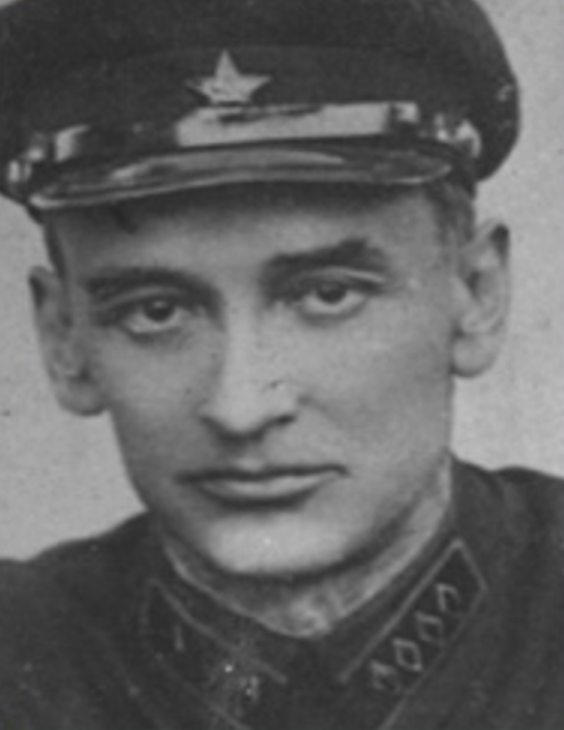
Gleb Ivanovich Bokii (1879-1937)
Gleb Bokii was born in Tiflis. His father, of Ukrainian origin, was a chemistry teacher and an impoverished nobleman, who moved from Tiflis to St. Petersburg to better educate his sons. The oldest, Boris passed competition for admission to Russia’s foremost technical Institute, the Mining Institute in 1890, and his brother Gleb followed suit six years later. Both became infected with the idea of fighting for the rights of the workers. In 1897, aged eighteen, Gleb joined the Union of Struggle for the Liberation of the Working Class, the organization that started the RSDLP and its Bolshevik faction, which later became the Communist Party.
After the Revolution he became deputy head of the Petrograd Cheka (the first Soviet secret police organisation.) In 1918 under his guidance the secret police shot eight hundred “counterrevolutionaries”. Many were innocent and did not work against the Bolshevik revolution but simply belonged to the bourgeois class. He was one of the organisers of the “red terror” in 1919-1920 in Turkestan that was distinguished by extreme cruelty. Because of his experience with ciphers, he became head of the Special Department of the Cheka also known as SPEKO. He was also the one who came up with the idea of a concentration camp for the intelligentsia that laid the foundations for the establishment of the Gulag.
Gleb Bokii was arrested on May 16, 1937. During the first two interrogations on May 17 and 18, Gleb Ivanovich “confessed” to the investigators. He reported on the “Masonry” lodge organized in 1925 together with Barchenko. One after another, with short intervals, Barchenko (May 22) and other former members of the “United Labor Brotherhood” in Leningrad and Moscow were taken into custody: Shishelova-Markova (May 26), Kondiayn (June 7), Schwartz (July 2), Kovalev (July 8). The same fate befell Barchenko’s most high-ranking “students” who were part of the Moscow group – Moskvin and Stomonyakov.
Vasily Bereshkov, Gleb Bokiy – Chekist and occultist
https://history.wikireading.ru/152992
The Masonic group that Bokii confessed to have joined in 1909 also had nothing to do with Barchenko’s 1923 “United Labor Brotherhood”. It was the Rose and Cross order. His claim that Gurdjieff had established it, was patently false as Gurdjieff was still in Turkestan in 1909.
I suspect Bokii made this claim to protect the family of the man who had actually sponsored him, (as Gurdjieff was no longer in Russia he could not be arrested and interrogated about the claim) his spiritual mentor Pavel Vasilievich Mokievsky (1856-1927). In 1906 when Bokii was arrested by the tsarist police for hiding an illegal printing press in a free canteen, funded by Mokievsky, for poor students at the Mining Institute, he was threatened with a long sentence. “Mokievsky paid 3,000 rubles for me, under the bail of which I was released,” Bokiy recalled a month before the execution in 1937.
In 1909, Mokievsky recommended Bokii to members of the highest order — Rosicrucians — for admission to the lodge. Among those who approved his introduction was Barchenko, “And although Barchenko was not known to me, he knew about me, as about one of Mokiev’s students” Bokiy clarified in 1937.
Mokievsky, who was a member of the board of the literary fund, knew the entire literary circle of Petersburg. For a long time, Mokievsky worked as the head of the philosophy department of the magazine “Russian Wealth”. In the capital, he was called a “literary doctor”. He was appreciated as a hypnotist, and more than that, a telepath. “Like everything new, hypnotism has caused contradictory judgments and generated misunderstandings,” Mokievsky wrote in the introductory article to Professor Boni’s work “Hypnotism”. He was also known as a philanthropist who was able to come to the aid of those students who got confused in the revolutionary upheaval and were threatened with imprisonment and exile.
It is said that another member of the order was the sculptor Sergey Merkurov, Stalin’s future court sculptor. He came to sessions and meetings from Moscow. Merkurov adhered to extreme leftist views, and was friends with fellow Gyumrian , the Armenian communist Stepan Shaumyan. It is also said that In 1911, Merkurov brought his cousin, Georgiy Ivanovich Gurdjiev, into the lodge. We now know that Gurdjieff was indeed living in St.Petersburg in 1911 but I highly doubt he had much to do with it as he was involved in other activities at the time. The other members named in Bokii’s confession, the Roerichs , Dr Riabin and Bokii’s fellow student friends, Stomoniakov and Moskovin have been shown to have been members.
The poet Alexander Blok, during his short stay in the order, created a brilliant example of his mystical interests – the play “Rose and Cross”, which is nothing but a dramatic version of the Martinist dedication.
 Gurdjieff Research